How to Finance Property Development

Almost every development uses a mix of the developer's own money and borrowed or partnered funds. Understanding the options, and what lenders expect, shapes what you can build and how much risk you carry.
The main sources of funding
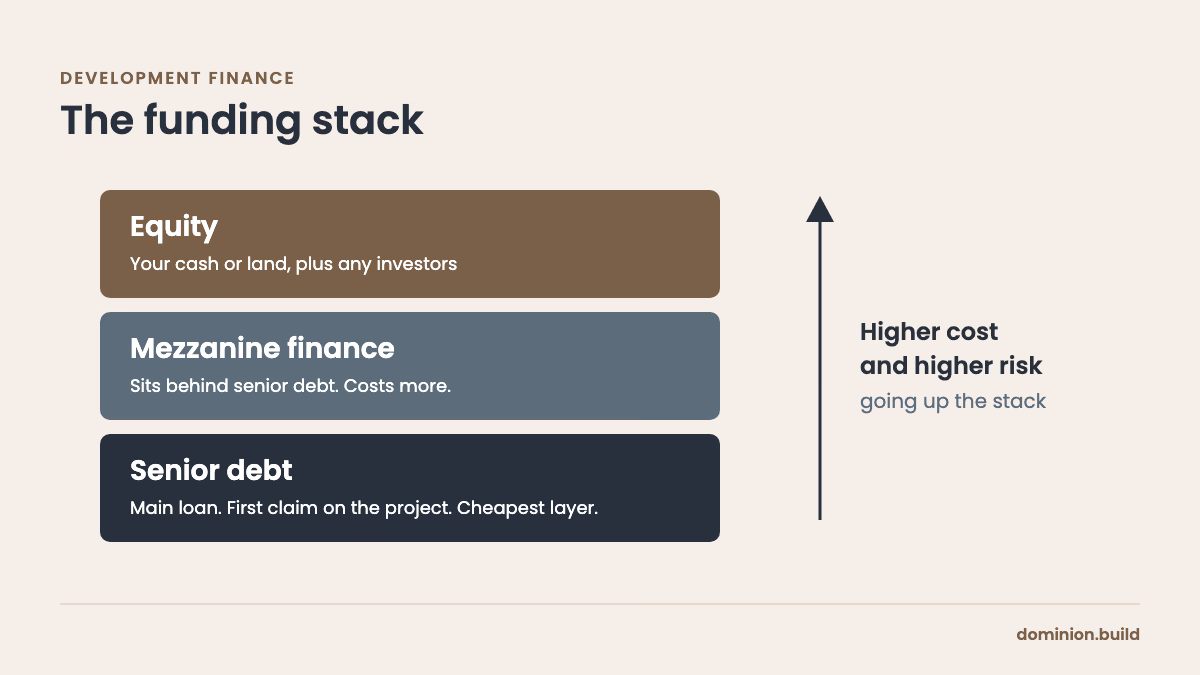
- Your own equity. Cash, or equity released from property you already own. Lenders expect the developer to have real money at risk.
- Senior debt. A construction or development loan from a bank or specialist lender, usually the largest part of the funding. It is secured over the site, has the first claim on the project and is typically drawn in stages as the project progresses.
- Mezzanine finance. Higher-cost funding that sits behind the senior lender and reduces the equity you need to contribute. It increases risk and cost.
- Joint ventures and equity partners. A partner contributes capital or the land in exchange for a share of the profit.
- Private lenders. More flexible and faster than banks in some cases, but usually at a higher price.
What lenders look for
- A feasibility that works on conservative assumptions.
- Planning approval, or a clear path to it.
- Pre-sales or pre-leasing, depending on the project and lender.
- A credible builder, fixed-price contract and professional team.
- The developer's track record, financial position and equity contribution.
- Loan to value and loan to cost ratios within the lender's limits.

How lenders size a development loan
Lenders usually test two ratios: loan against the project's expected end value, and loan against the total cost to build. They also look at the profit margin the project shows, because a thin margin leaves little room if costs rise or sales fall. Each lender sets its own limits, so the amount you can borrow varies. A broker who works with development lenders can tell you what is realistic for your project.
What goes in a funding application
- A feasibility study showing costs, expected value and the margin.
- Planning approval or a clear pathway to it.
- Plans, specifications and a fixed-price or detailed construction contract.
- Evidence of the builder's licence, insurance and track record.
- Your own financial position and development experience.
- Evidence of equity and the source of funds.
- For sales projects, evidence of pre-sales or market demand. For hold projects, rental evidence.
How to prepare
- Build a detailed feasibility with a contingency and a stress test for rates and delays.
- Have approvals, plans and the builder's contract ready.
- Know how much equity you can bring and where it comes from.
- Speak to a broker who understands development finance early.
[cta]
The costs people forget
- Interest during construction, which is capitalised and accrues until completion.
- Loan establishment, valuation and legal fees.
- Monthly cost of the lender's quantity surveyor drawing inspections.
- Professional fees: architect, engineers, town planner, project manager.
- Council and utility contributions.
- GST, where it applies.
- A contingency allowance for cost overruns and delays.
Sell or hold: how the exit affects finance
If you plan to sell the finished product, the lender wants to see how the sale will repay the loan, often through pre-sales. If you plan to hold it, the lender wants to see that the building can refinance onto a long-term loan at completion, supported by rental income. A project that depends on a refinance needs to work at the interest rates and valuations the new lender will use.
Interest rates matter
Funding costs move with the rate cycle, so assumptions that worked a year ago may not hold. The RBA cash rate target has been 4.85% since 4 November 2026, after five increases this year. For context, see what the RBA rate cycle means for property investors.
What can go wrong
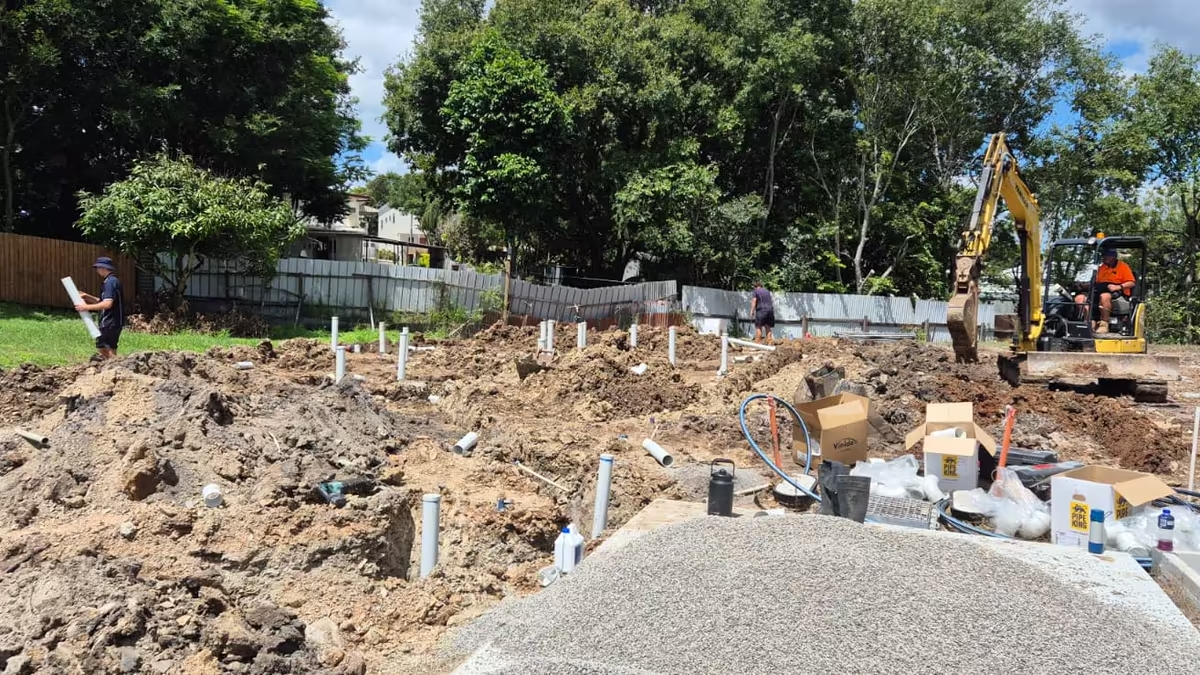
- Costs rise and the contingency runs out.
- Variations and price changes under the building contract. A fixed price sets the build price up front, but variations, delays and supply problems can still change the final cost, so the contract inclusions matter.
- Planning or construction delays extend the interest bill.
- The valuation at completion comes in below expectations.
- Sales slow or rates rise before the exit.
- A builder fails during the project.
Plan for these, not just the case where everything goes to schedule.
A different way to participate
Some investors prefer to put capital into a finished, operated asset than to carry development funding risk themselves. See the investor's guide to co-living assets.
Frequently asked questions
How do you finance a property development?
Most developments combine senior debt from a bank or lender, your own equity, and sometimes mezzanine finance, joint venture partners or private lenders. The lender assesses the project, the margin, the builder and your experience.
How much deposit do you need for a development loan?
It varies by lender and project. Lenders typically want a meaningful share of the cost to come from your own equity or land, and they test the loan against both the project's cost and its end value. A broker can tell you what is realistic.
What is mezzanine finance?
Mezzanine finance is a layer of funding that sits behind senior debt and in front of your equity. It fills the gap when the senior loan does not cover enough of the cost, and it costs more because it carries more risk.
Can I finance a development with no experience?
It is harder. Lenders weigh track record heavily. Beginners often start with a smaller project, partner with an experienced developer or invest alongside one. See how to get started in property development.
Is there an alternative to financing a development myself?
Yes. Some investors take a share of a project, fund it through a lending product or buy a finished asset from a developer instead of managing the build. Each route has its own risks, so seek advice.
Where to from here. If you want to talk about how Dominion works with investors, get in touch.
[cta]
Elevate Your Portfolio With Dominion!
Elevate Your Portfolio With Dominion!
References
- Cash rate target, Reserve Bank of Australia. Accessed 16 November 2026.
- Contract changes and variations, Queensland Building and Construction Commission. Accessed 16 November 2026.
- Fixed-price contracts: what QBCC licensees should know, Queensland Building and Construction Commission. Accessed 16 November 2026.
- Changing a domestic building contract price, Consumer Affairs Victoria. Accessed 16 November 2026.
- Borrowing to invest, Moneysmart (ASIC). Accessed 16 November 2026.
General information only. This article is not financial, tax, legal or credit advice and does not consider your objectives, financial situation or needs. Figures, examples, rules, rates and tax settings are illustrative, can change, and may not reflect the latest position. Returns are not guaranteed. Confirm the current position with a licensed adviser, accountant or the relevant authority before making a decision.


Related Posts