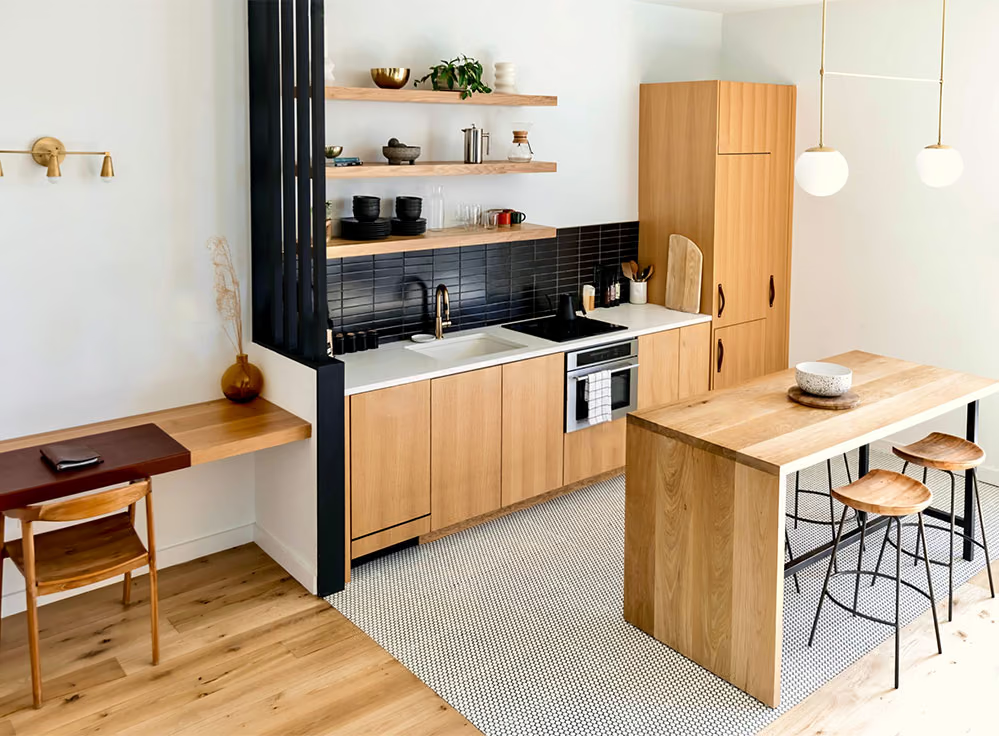
How to Get Started in Property Development
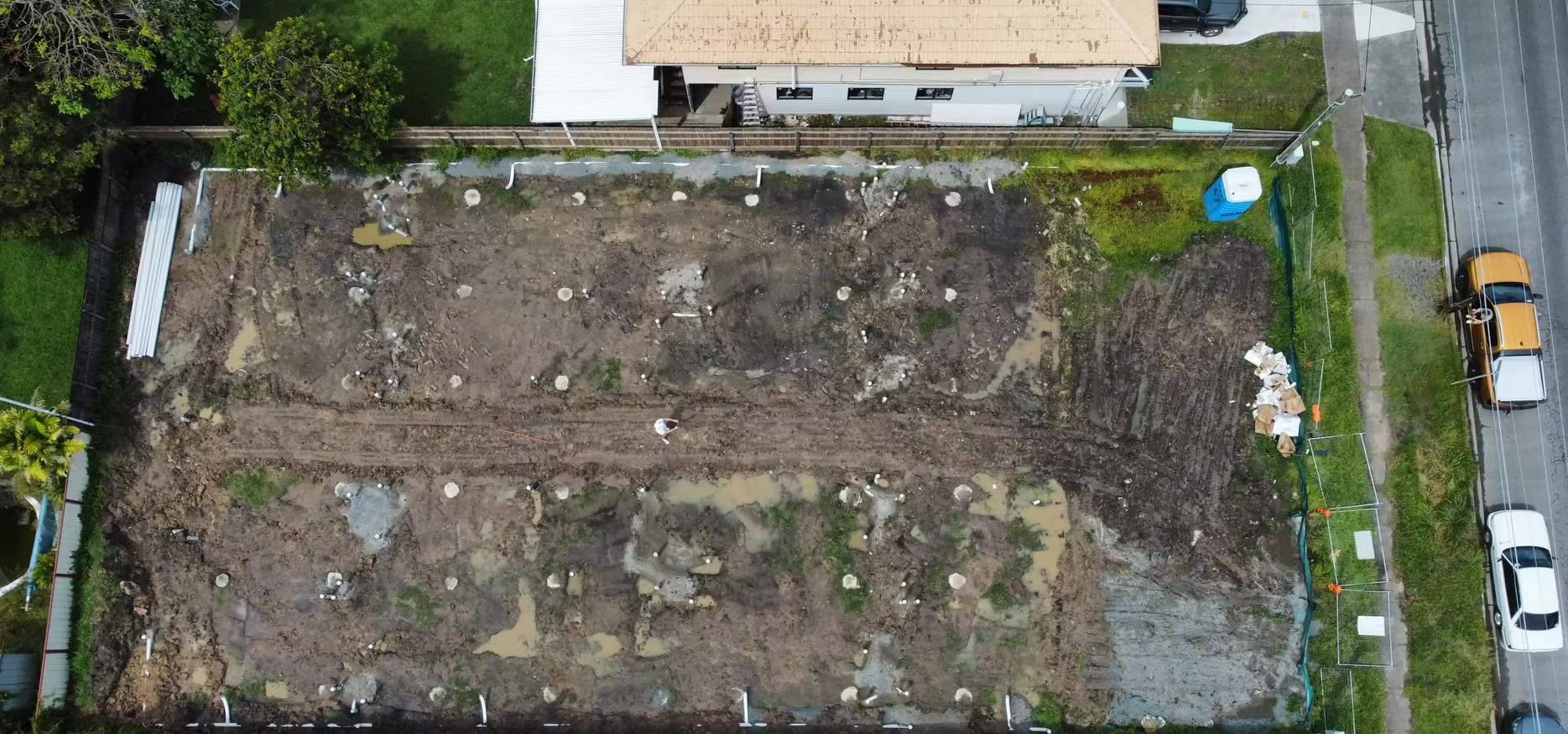
Property development means creating value by changing what is on a site: subdividing land, building new homes, or redeveloping an existing property. It can be rewarding, but it is closer to running a small business than to buying a rental. This guide covers what it takes to start.
What you need before you start
- Capital. Development ties up money for months or years. You need equity for the deposit, holding costs and a contingency, plus a funding plan for the build.
- Knowledge. Planning rules, construction costs, contracts, tax and the local market all matter. Gaps in any one can erase the profit.
- A team. Most developers rely on a town planner, architect or designer, builder, surveyor, solicitor and accountant.
- Time and temperament. Approvals and construction rarely run to plan. You need patience and a buffer.
Skills and people you need around you
- Town planner. Advises on zoning, permits and what the site can support.
- Architect or building designer. Designs a project that meets the rules and the market.
- Builder. A licensed builder with a track record in your type of project.
- Quantity surveyor. Estimates costs and checks the builder's claims.
- Solicitor. Reviews the contract of sale and development agreements.
- Accountant. Advises on structure, GST and tax.
- Broker or finance specialist. Arranges funding. See how to finance a development.
Start small
Many people begin with a modest project, such as a duplex, a two or three lot subdivision or a small block of townhouses. The scale is manageable, the funding is simpler and the lessons carry to larger projects. Small-scale shared housing, such as rooming houses, is another entry point because the footprint and approvals can be more contained. It still brings its own rules on approvals, building class and operation, so read Class 1b buildings explained before treating it as a simpler option.
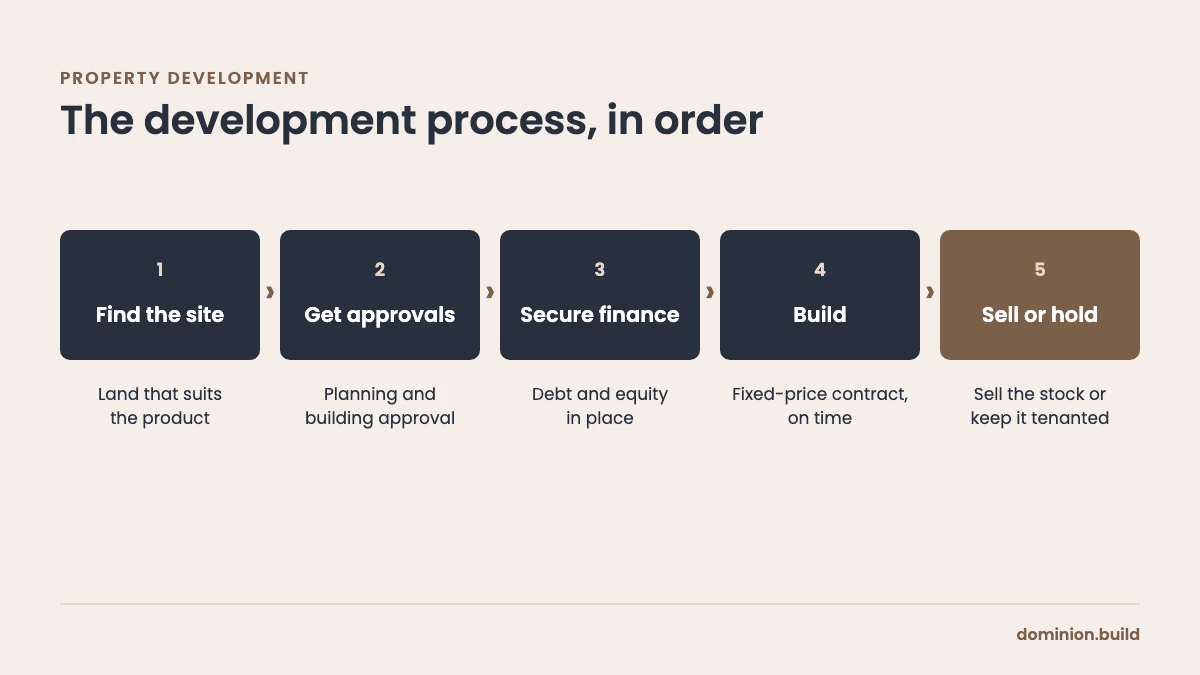
The basic process
- Find and assess a site. Check zoning, overlays, size, access, services and what the planning scheme allows.
- Run a feasibility. Estimate purchase price, costs, finance, taxes, sales or rental value and profit. If it only works on optimistic numbers, it does not work.
- Secure the site. Often with a contract subject to planning approval or finance. Conditions in a contract of sale need legal advice, and a seller may not accept them.
- Get approvals. Planning permit, building permit and any engineering sign-offs.
- Fund and build. Appoint a builder on a clear contract and manage progress and variations.
- Sell or hold. Sell completed lots for profit, or hold the asset for income.
[cta]
The first project: a short checklist
- Define the project type and size you can realistically manage.
- Learn the planning rules for the council area.
- Find a site and run a feasibility study before you commit.
- Secure the site with a conditional contract, subject to finance and planning, after getting legal advice.
- Get planning approval and finalise designs.
- Arrange funding and a fixed-price construction contract.
- Manage the build and keep a close eye on cost and programme.
- Sell or lease the finished project.
Reading a feasibility study
A feasibility study sets expected revenue against all costs: land, taxes, professional fees, construction, finance, selling or leasing costs and contingency. The difference is the profit, and the margin is the profit as a share of cost. Check the assumptions. Is the expected sale price based on recent comparable sales? Is the construction cost based on a quote? Is there a contingency? A project that only works with optimistic assumptions is not a good project.
The common mistakes
- Buying a site before confirming what can be approved.
- Underestimating construction cost and holding cost.
- Relying on rising prices to make the numbers work.
- Running out of funding when the programme slips.
- Paying too much for the site, which leaves no margin.
- Using an unlicensed or untested builder.
- Choosing a design the market does not want.
- Taking on too big a project too soon.
Ways to learn without taking full risk
- Work with or for a developer or builder.
- Start with a small project such as a dual occupancy or a renovation.
- Join a joint venture as a junior partner.
- Invest in a project run by an experienced developer.
Another route: invest alongside a developer
Not everyone wants to run a project. Some investors prefer to own a completed asset that a specialist has designed, built and operates. That is how Dominion works with co-living assets.
Frequently asked questions
How do I get started in property development?
Learn the planning and finance basics, build a team of advisers, start with a small project, run a feasibility study before you commit to a site, and secure funding and a fixed-price build. Many people learn by working with an experienced developer first.
Can you get into property development with no experience?
Yes, but the risks are higher. Beginners often start with a small project, partner with an experienced developer, or invest in a project they do not manage themselves.
How much money do you need to start property development?
It depends on the project. You need enough equity to satisfy lenders, cover costs before the loan is drawn and absorb overruns. A broker or adviser can give you a realistic range for your project.
What is the easiest type of property development to start with?
Smaller projects such as a renovation, a dual occupancy or a townhouse pair are common starting points. They still need planning approval, finance and a good builder.
What is the biggest risk for new property developers?
Paying too much for the site and underestimating costs and delays. A thin margin leaves no room for either. A realistic feasibility study with a contingency is the main protection.
Where to from here. If you would rather invest in a finished, operated asset than take on development yourself, talk to us.
[cta]
Elevate Your Portfolio With Dominion!
Elevate Your Portfolio With Dominion!
References
- Contract changes and variations, Queensland Building and Construction Commission. Accessed 16 November 2026.
- Changing a domestic building contract price, Consumer Affairs Victoria. Accessed 16 November 2026.
- Tax consequences on sales of property, Australian Taxation Office. Accessed 16 November 2026.
General information only. This article is not financial, tax, legal or credit advice and does not consider your objectives, financial situation or needs. Figures, examples, rules, rates and tax settings are illustrative, can change, and may not reflect the latest position. Returns are not guaranteed. Confirm the current position with a licensed adviser, accountant or the relevant authority before making a decision.


Related Posts