

Class 1b Building Explained
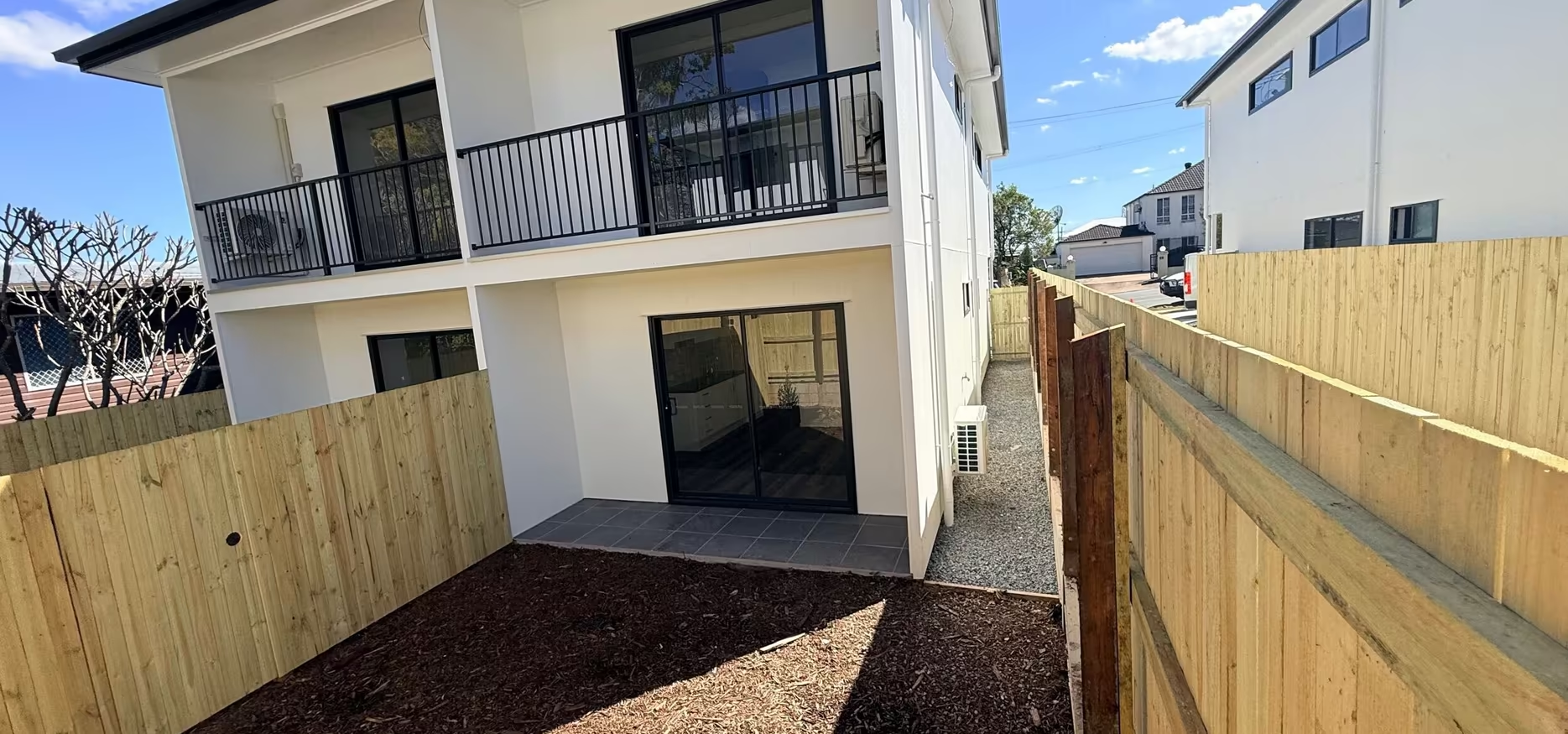
If you are looking at rooming houses or small-scale shared housing, you will run into the term Class 1b. It is a building classification under the National Construction Code (NCC), and it decides which construction and safety rules apply.
What is a Class 1b building?
The NCC sorts buildings into classes by how they are used. Class 1 covers houses and similar small residential buildings. It is split into two parts:
- Class 1a is a single dwelling: a detached house, or one of a group of attached dwellings such as a row house, terrace house, town house or villa unit.
- Class 1b is a boarding house, guest house, hostel or the like with a total floor area of all floors not exceeding 300 square metres, in which not more than 12 people would ordinarily be resident.
Rooming houses that fall inside those limits are typically treated as Class 1b. The limits above are from the NCC 2016 Volume One classification clause. Confirm the NCC edition and any state variation that applies to your site, and ask a building surveyor to confirm the class.
Class 1b vs Class 3
Larger boarding houses, hostels and similar buildings that exceed the Class 1b limits are generally classified as Class 3. Class 3 buildings face more demanding requirements, particularly for fire safety, egress and services. That affects design, cost and approval.
Why the class matters to an investor
- Construction cost. Higher classes carry stricter fire and safety requirements.
- Approvals. The class affects what the council and building surveyor will require.
- Design. Room numbers, floor area and layout are limited by the class.
- Compliance. Owners and operators must keep the building compliant with the class it was approved as.
Class 1b and shared housing in practice
Class 1b is one reason small purpose-built rooming houses are attractive. They can be built at a modest scale on suburban sites. But the classification is only one part of the picture. State and local rules on registration, planning permits and minimum standards also apply. For background, see what a rooming house is.
What to check before you buy or build
- Confirm the approved building class on the occupancy permit or building approval.
- Check the council planning rules and any permit requirements.
- Ask a building surveyor to confirm the fire safety requirements for the intended use.
- Review the state rules for registering and operating a rooming house.
Class 1a, 1b and 3 side by side
- Class 1a. A single dwelling: a detached house or one of a group of attached dwellings such as a townhouse or terrace.
- Class 1b. A boarding house, guest house or hostel of no more than 300 square metres in total floor area, with not more than 12 people ordinarily resident.
- Class 2. An apartment building with more than one dwelling.
- Class 3. Larger boarding houses, hostels, guest accommodation and similar buildings above the Class 1b limits. More demanding fire safety and egress requirements.
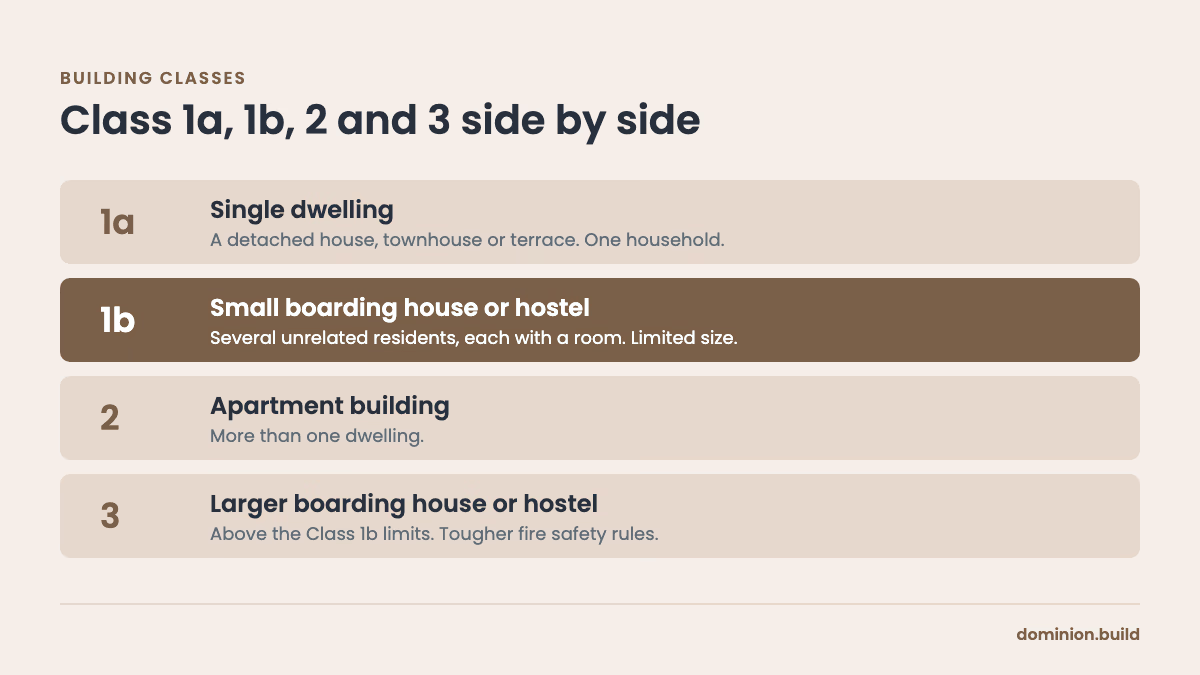
The limits for Class 1b are set in the NCC and can change between editions, so always check the edition in force. A building surveyor confirms the classification.
[cta]
What changes between Class 1b and Class 3
- Fire safety. Class 3 typically needs more extensive fire detection, fire separation, emergency lighting and exit requirements.
- Egress. Class 3 buildings need to provide safe paths of travel out for more occupants.
- Construction cost. The extra systems and fire-rated construction add cost.
- Approvals. The assessment is more detailed and the process can take longer.
- Layout. The class affects how many rooms and residents you can fit.
Fire safety in a Class 1b building
Fire safety is the part of the class that matters most to residents and to insurers. Typical requirements include smoke alarms that are interconnected, appropriate fire separation between rooms and between the building and its surroundings, safe exits from sleeping areas, and emergency lighting where required. Requirements depend on the building's design, the NCC edition it was approved under and state variations, so confirm them with a building surveyor.
How the class is set
- Design. The architect and building surveyor design the building to a target class.
- Approval. The building surveyor issues the building permit for that class.
- Completion. An occupancy permit or certificate of final inspection records the approved class and use.
- Operation. The owner and operator must keep using the building within that class.
What happens if the building is not compliant
A building used outside its approved class, or one that no longer meets its requirements, can face notices from council or the building authority, orders to rectify, fines and, in serious cases, orders to stop occupation. Insurance can also be affected. For an investor, that means a property bought without checking its class and approvals can carry costs that were not in the price.
Changing a building's class or use
Converting an existing building, for example a house into a rooming house, usually means a change of use. That can trigger a new building approval, upgrades to fire safety, and planning approval from the council. The cost and difficulty depend on the building. Get advice from a building surveyor before you buy a property on the assumption that it can be converted.
Why purpose-built matters
A building designed from the outset for Class 1b use can build in the fire safety, amenity and layout the class requires. A converted building often has to retrofit them. That is one reason investors look at purpose-built shared housing, and it ties back to how a rooming house is regulated and operated.
Frequently asked questions
What is a Class 1b building?
Class 1b is a National Construction Code classification for a boarding house, guest house, hostel or the like with a total floor area of no more than 300 square metres and not more than 12 people ordinarily resident. Confirm the limits for the NCC edition that applies.
What is the difference between Class 1a and Class 1b?
Class 1a is a single dwelling such as a detached house, or a townhouse or terrace in a group of attached dwellings. Class 1b is a small boarding house or similar building where several unrelated people each rent a room.
What is the difference between Class 1b and Class 3?
Class 3 covers larger boarding houses, hostels and similar buildings that go beyond the Class 1b limits. It has more demanding fire safety and egress requirements, which adds to cost and approvals.
Is a rooming house a Class 1b building?
A rooming house within the NCC limits is typically treated as Class 1b, and larger ones as Class 3. State and local rules on registration and planning also apply.
Where do I find a building's class?
The class is recorded on the building approval and the occupancy permit or certificate of final inspection. A building surveyor can confirm it.
Where to from here. If you are weighing up shared housing as an investment, get in touch and we will explain how Dominion approaches it.
[cta]
Elevate Your Portfolio With Dominion!
Elevate Your Portfolio With Dominion!
References
- NCC 2016 Volume One, Part A3: Classification of buildings, Australian Building Codes Board. Accessed 16 November 2026.
- Building classes, Queensland Building and Construction Commission. Accessed 16 November 2026.
- Rooming houses: registration and permits, Maroondah City Council. Accessed 16 November 2026.
General information only. This article is not financial, tax, legal or credit advice and does not consider your objectives, financial situation or needs. Figures, examples, rules, rates and tax settings are illustrative, can change, and may not reflect the latest position. Returns are not guaranteed. Confirm the current position with a licensed adviser, accountant or the relevant authority before making a decision.


Related Posts


